Glossary of Tree Care & Environmental Terms

Glossary (A to Z)

If you’re researching local tree services for the first time, you’ve probably come across a few unfamiliar terms.

We know that these specialist words can be confusing at first, so our tree surgery glossary has all the definitions you need to make the right choices regarding your tree’s care.

If you have any queries or want a quote for our Essex tree service, don’t hesitate to contact us today.

A

  • Adaptive Growth: When a tree grows extra wood in certain areas to make itself stronger. Common after weather damage or weight impact.
  • Adventitious/Epicormic Growth: When new shoots grow in unusual places on a tree (usually along the trunk or on bigger branches). This can happen if the tree has recently been cut back or put under stress.
  • Aerial Inspection: When a tree surgeon uses climbing clear and/or a platform to closely inspect a tree from height.
  • Arboriculture: The science of growing, managing, and caring for trees, shrubs, vines, and other woody plants.
  • Arboricultural Consultancy Services: Where an arboricultural consultant gives professional advice about tree care, planning, safety, and legal compliance.
  • Arboricultural Supervision: Where an arboricultural consultant oversees any tree work conducted to ensure it’s done safely and legally.
  • Arborist: A trained tree care professional who specialises in the safety and management of trees, and also understands the bio mechanics of trees.
  • Arisings: Any waste left over after tree work, like branches, leaves, and wood chips.
A white utility lorry with an extended orange cherry picker lifts a worker to trim tall trees in a grassy garden, with a wooden fence, blue sky, and other equipment in the background.
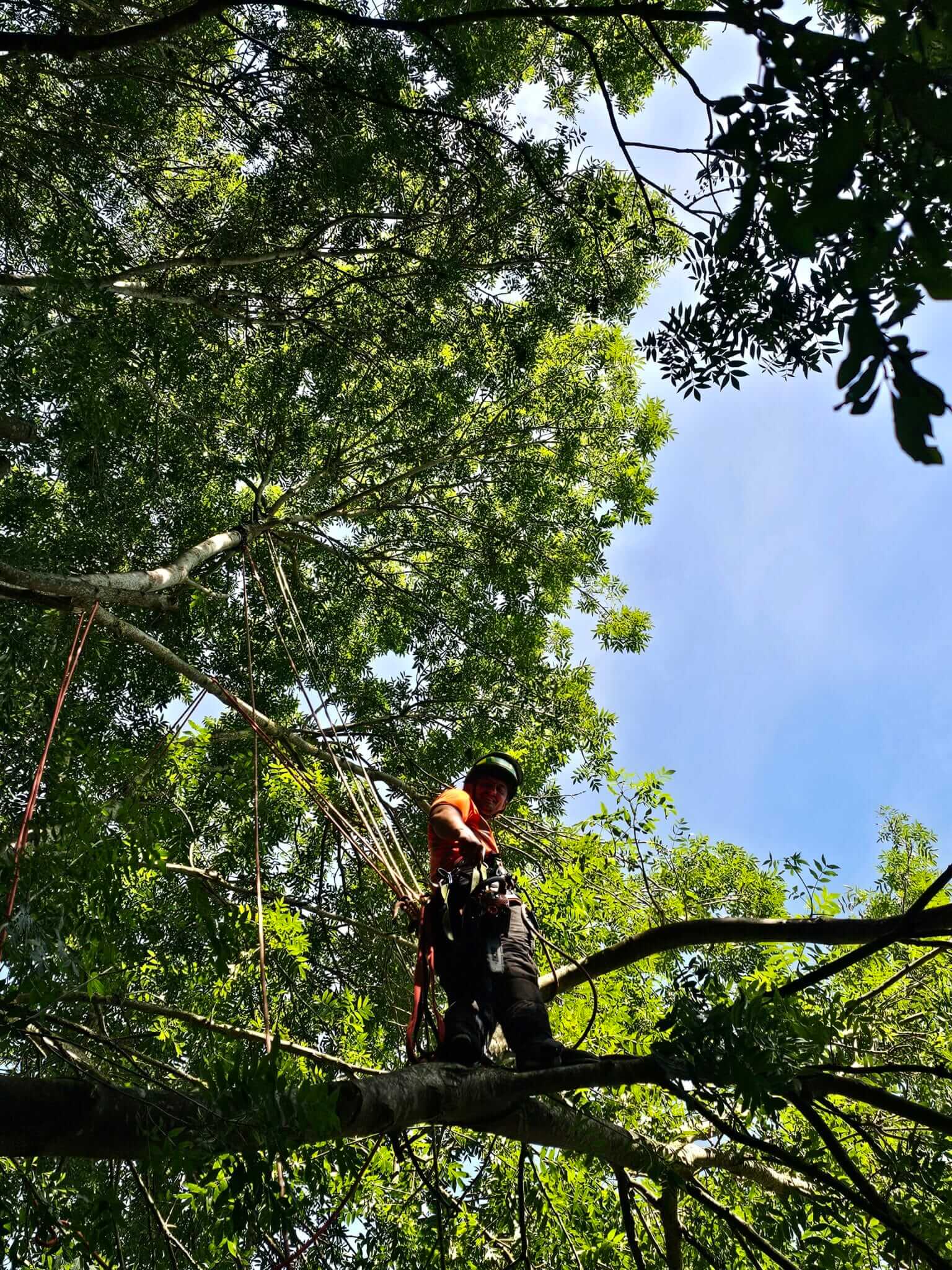
Crown Tree Services arborist working at height in tree canopy, Essex

B

  • Branch Collar: A raised area between a branch and a tree’s trunk.
  • Branchwood/Brash/Brushwood: Any small branches and twigs that aren’t the trunk or larger stems of a tree.
  • Buttress Roots: Big, flared roots that start at the base of a tree and extend upwards. They offer support and stability.

C

  • Cabling and Bracing: Using rods, cables or synthetic braces to prevent weaker parts of a tree from breaking.
  • Canopy: The top-most part of the tree. Acts like a roof.
  • Cavity: A hole found in a trunk or a big branch, often caused by decay.
  • Chipping: The act of breaking branches into smaller pieces for mulch.
  • Clearance Pruning: Cutting back branches so they don’t block roads, pavements, or buildings.
  • Co-dominant Stems: Where two or more main stems start growing from the same spot. Can cause tree weakness.
  • Commercial Tree Services: Tree services carried out by a commercial tree surgeon for businesses, councils, and other organisations.
  • Conservation Area: A designated place of special architectural or historic interest where extra planning controls are applied to preserve and/or enhance its appearance.
  • Crown/Tree Crown: The branches and leaves of a tree.
  • Crown Cleaning: Removing dead, decaying, or unsafe branches from the crown.
  • Crown Lifting/Crown Raising: Removing lower branches from the crown to give pedestrians, cars, and buildings more space.
  • Crown Reduction/Tree Crown Reduction: Reducing the size of the crown by cutting the branches back while keeping to a natural shape.
  • Crown Thinning: Removing selected branches to allow for more light and reduce wind resistance. Learn more about crown thinning.
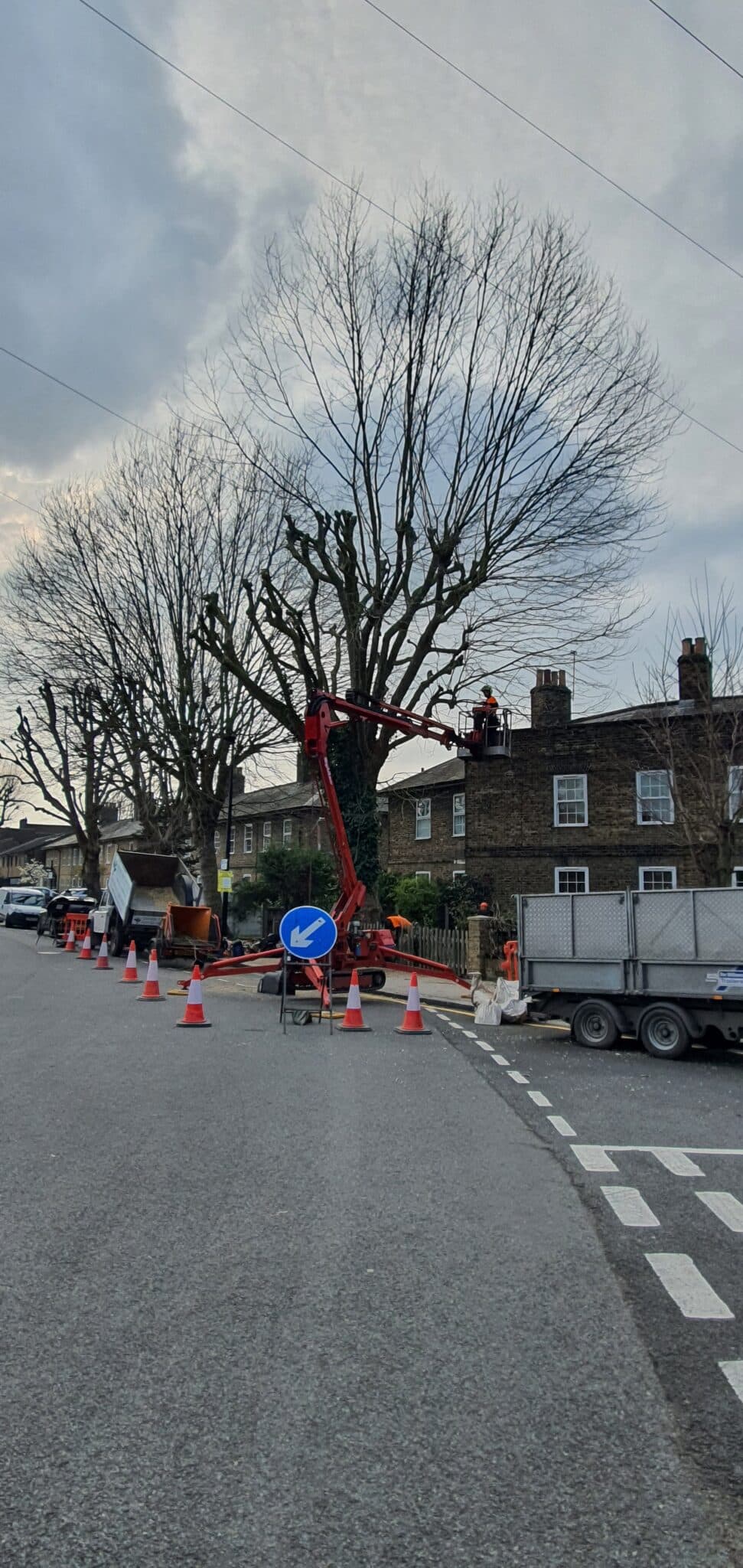
Workers using a cherry picker trim large trees beside a residential street lined with brick houses. Traffic cones, a trailer, and a blue directional road sign are visible in the foreground.
A sunny back garden with green grass, a hammock hanging from a leafy tree, garden furniture, colourful flowers in planters, and a wooden fence with houses visible in the background under a partly cloudy sky.

D

  • Deadwood: Tree branches that have died and no longer have leaves.
  • Deadwood Removal: Removing a tree’s dead branches.
  • Decline: When a tree starts to become weaker.
  • Dieback: When tree branches start dying, from the tip to the trunk.
  • Disease: When a tree is diseased, often caused by pests, fungi, and bacteria.
  • Disease Management: Trying to reduce or stop a tree disease from progressing.
  • Domestic Tree Services: Residential tree services conducted for homeowners.
  • Dormant: When a tree is in its ‘resting’ stage. No growth happens in the dormant season, which is usually in winter.
  • Drip Line: The ground area directly under the outer ‘tips’ of a tree’s branches, where raindrops fall!
  • Drop Crotching: Where a branch is cut back to a smaller side branch to control growth and size.

E

  • Ecological Surveys: An ecological survey is a type of tree assessment which estimates how your project could impact existing habitats, wildlife, and plants in the area. Followed up with preventative measures and steps.
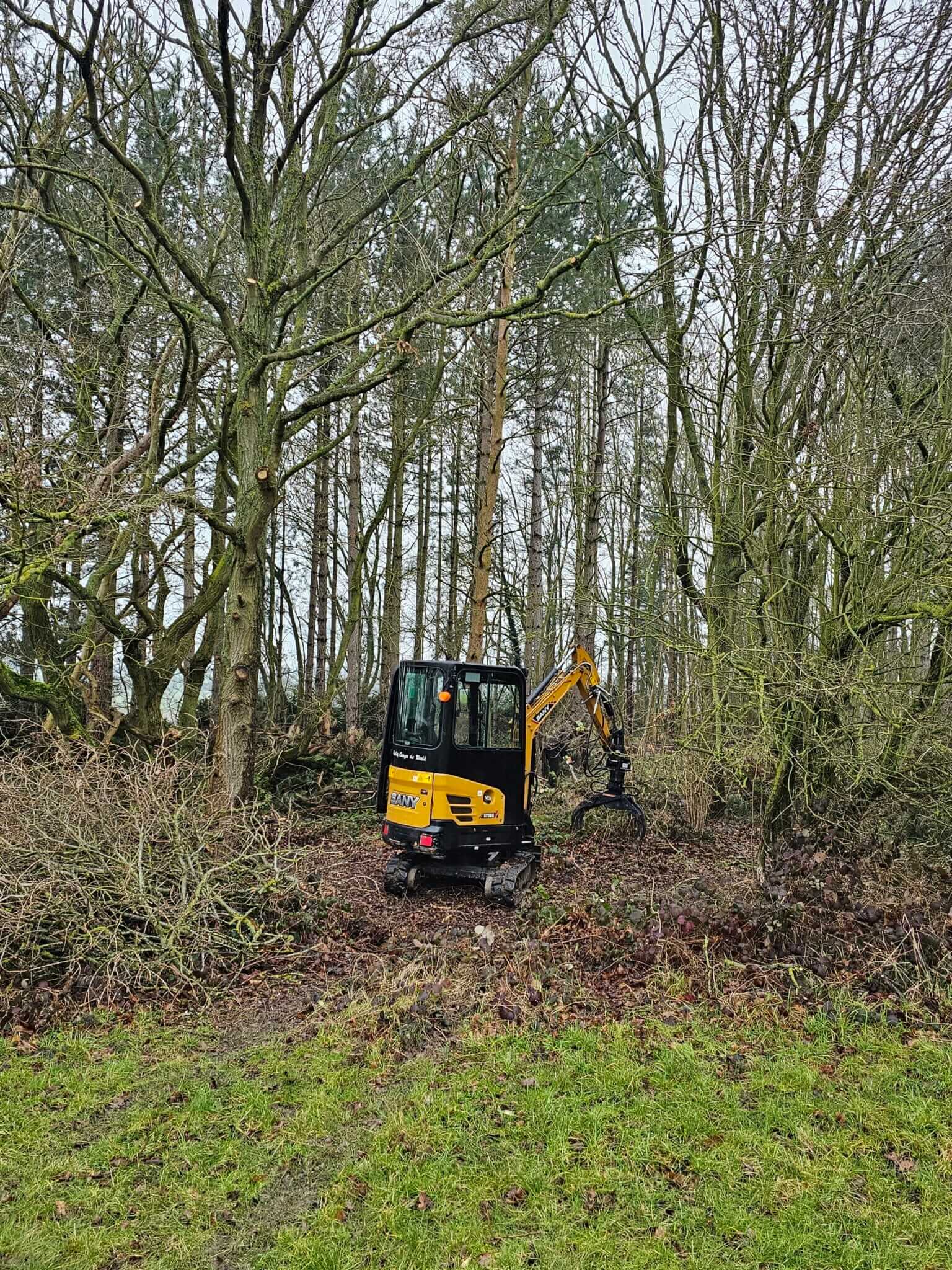
A small yellow digger is parked among tall, leafless trees and dense undergrowth in a forested area, with green grass in the foreground.
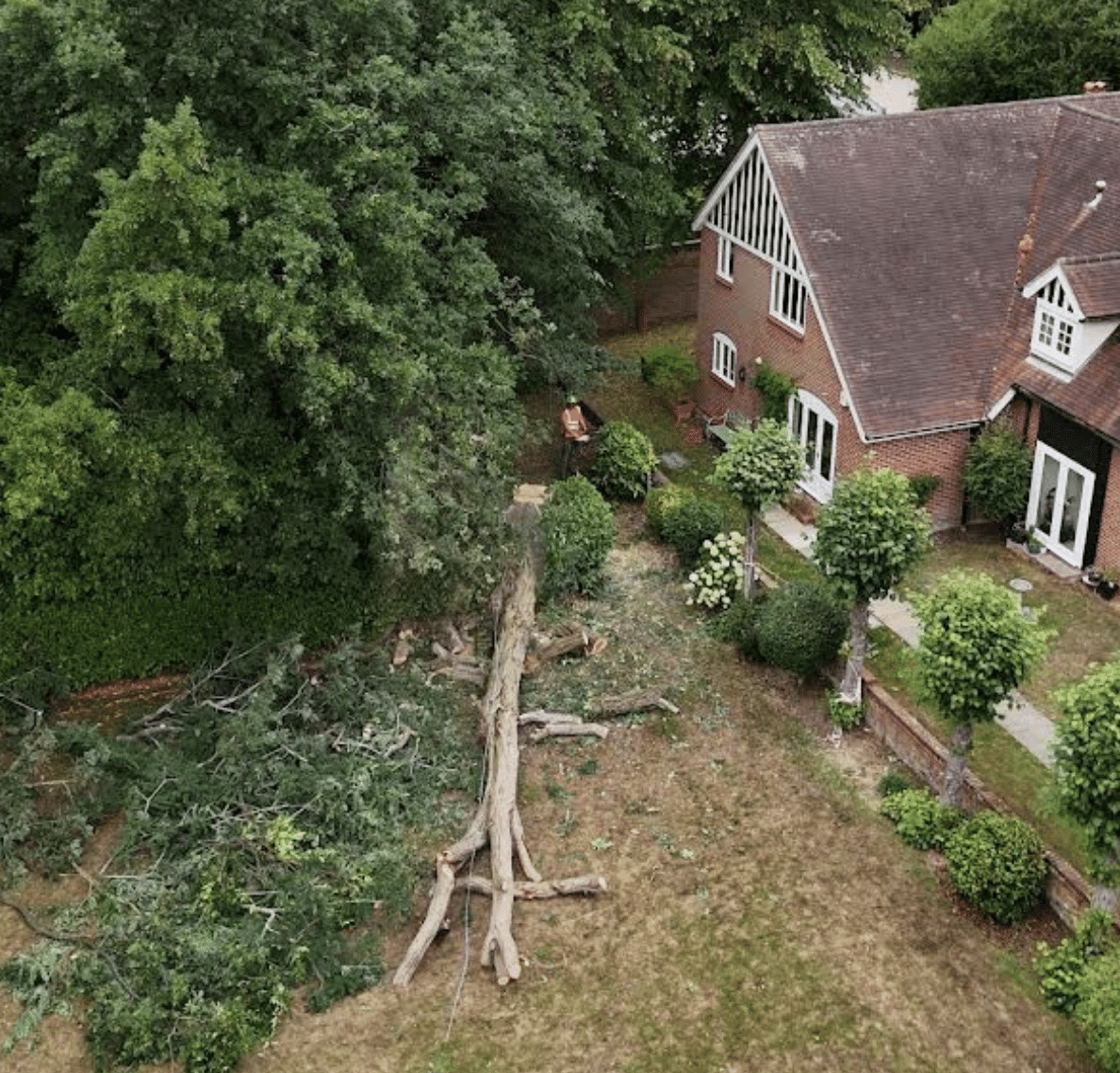
A large fallen tree lies on the ground near a red-brick house with a sloping roof. The tree appears to have broken from its base, and branches are scattered across the garden.

F

    • Formative Pruning: Pruning a tree when it is young to help it grow stronger and healthier.
    • Fungal Fruiting Bodies: The visible parts of fungi growing on a tree. Can be a sign of tree decay.

H

    • Habitat Creation: Improving outdoor areas to benefit wildlife and help them thrive.
    • Hazard Assessment: Conducted to check for safety risks, like weak branches, before tree work begins.
    • Hedge Removal: Removing hedges in full while preventing re-growth. Learn more about hedge removal.
    • Hedge Trimming: Cutting hedges to keep them neat and healthy. Take a look at our hedge trimming service page for more information.
    • Height Reduction: Making a tree shorter.
    • Herbicide Application: Applying weed-killing chemicals (herbicides) near a tree to support its growth. Also known as tree herbicide.
A small forestry vehicle with a mechanical claw lifts and carries cut tree logs through a wooded area. The ground is covered with branches and tree debris, and leafless trees surround the scene.
A tree surgeon in safety gear cuts branches high up in a damaged tree, whilst another person stands below near a wooden building, surrounded by greenery and fallen branches.

I

    • Included Bark: When bark gets trapped between a pair of branches or stems. Can cause weakening and splitting.

J

    • Japanese Knotweed Management: A variety of Japanese knotweed removal methods to control its fast-spreading and invasive growth.
Green leaves in sharp focus against a blurred background of sunlight filtering through trees, creating round bokeh effects and a lush, vibrant atmosphere.
A large willow tree with broken branches stands in a fenced back garden. Some branches hang low or rest on the ground, indicating storm damage. The sky is overcast and the grass is green.

L

    • Landscape Maintenance: The general upkeep of gardens and other outdoor spaces for aesthetics and plant or tree health. Explore our landscape maintenance service.
    • Leader: The core upright stem of a tree, which gives it its height.
    • Lion Tailing: When too many inner branches are removed from a tree, leaving leaves just on the tip. This can harm tree health.
    • Lopping: Cutting off large branches from a tree.

M

    • Mulching: Putting a layer of wood chips or compost around the base of a tree for moisture retention and nutrients.
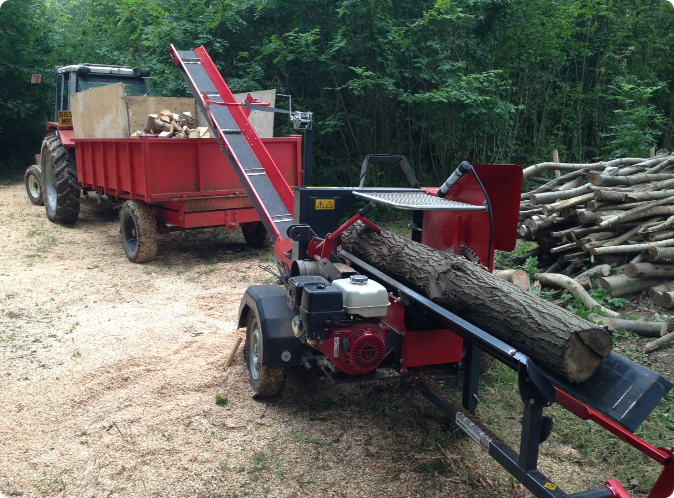
A log splitter machine processes a large log, with cut firewood piling up nearby. A red tractor and trailer filled with split wood are parked on a dirt area surrounded by trees.
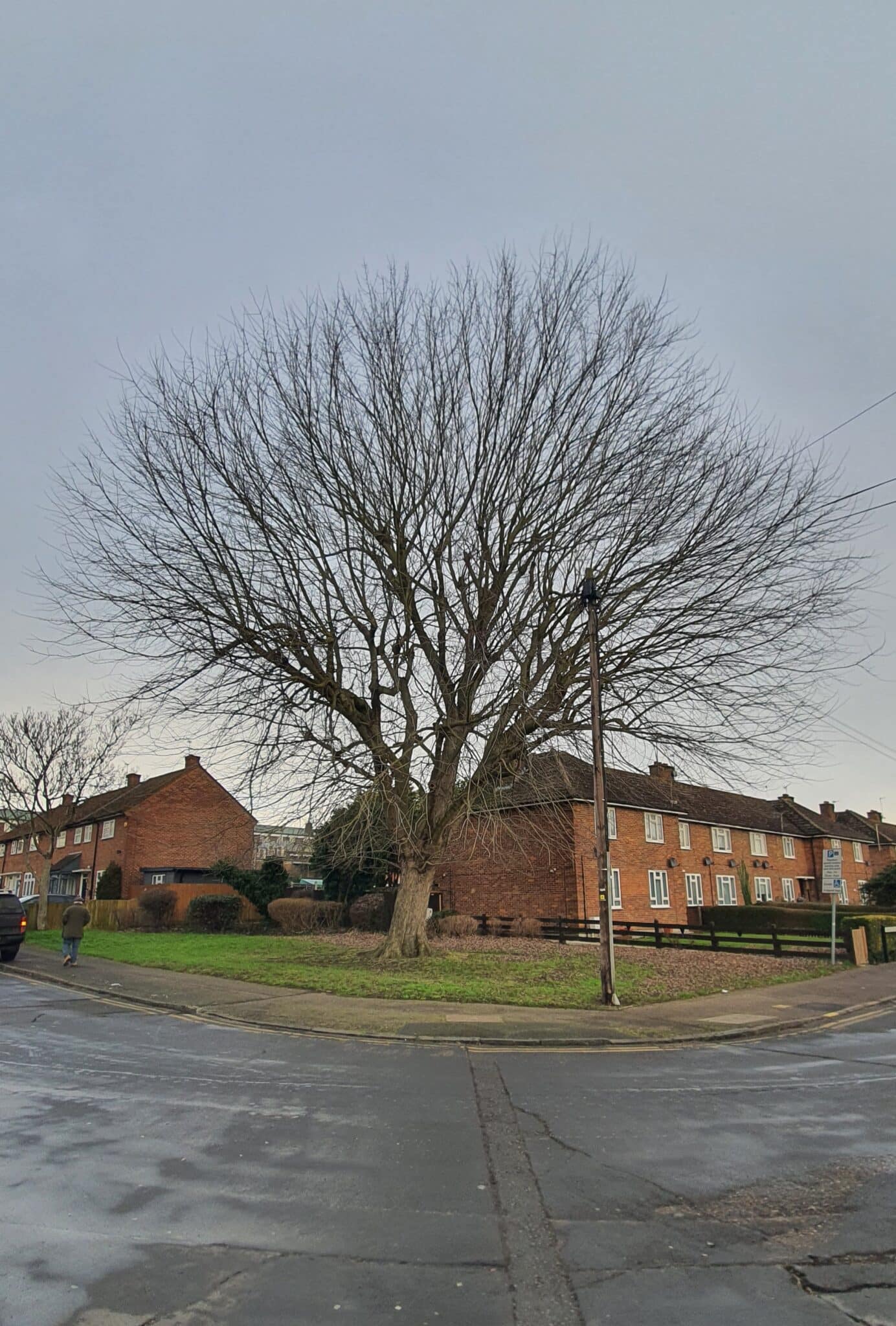
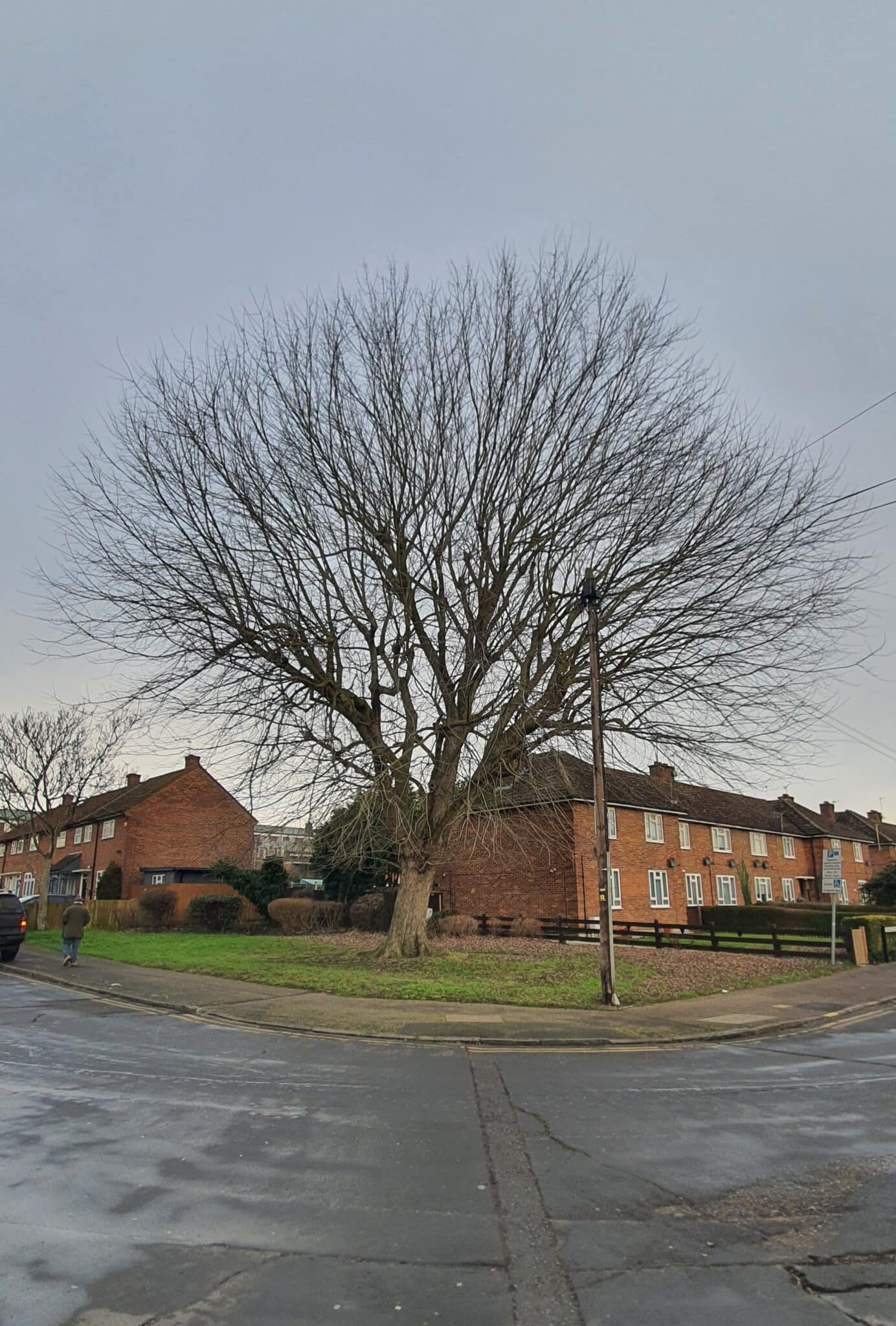
A large, leafless tree stands at the corner of a quiet residential street, surrounded by brick houses with white windows under an overcast sky. A person walks on the pavement to the left.

P

  • Planting Planning and Advice: Tips and techniques given by arborists about what to plant and where for best results.
  • Planting Schemes: A type of visual plan to show where different trees and plants will go in a particular area.
  • Pollarding/Tree Pollarding: Cutting the top branches of a tree to manage its size and encourage new growth. Learn more about our tree pollarding process.
  • Pruning: Cutting branches of a tree to keep it neat, healthy, and safe.

R

    • Retrenchment Pruning: Reducing the height and spread of an older tree to enhance safety and encourage new growth.
    • Rigging: Using ropes and pulley equipment to lower large branches safely during a removal.
    • Risk Assessment: A safety check conducted before tree work begins to identify and reduce the risk of hazards. Similar to ‘Hazard Assessment’/
    • Root Flare: The point at which a tree’s trunk widens out into its roots.
    • Root Protection: Preventing root damage within a tree’s root protection area (RPA). A common risk during construction work.
    • Root Pruning: The act of cutting back a tree’s roots.
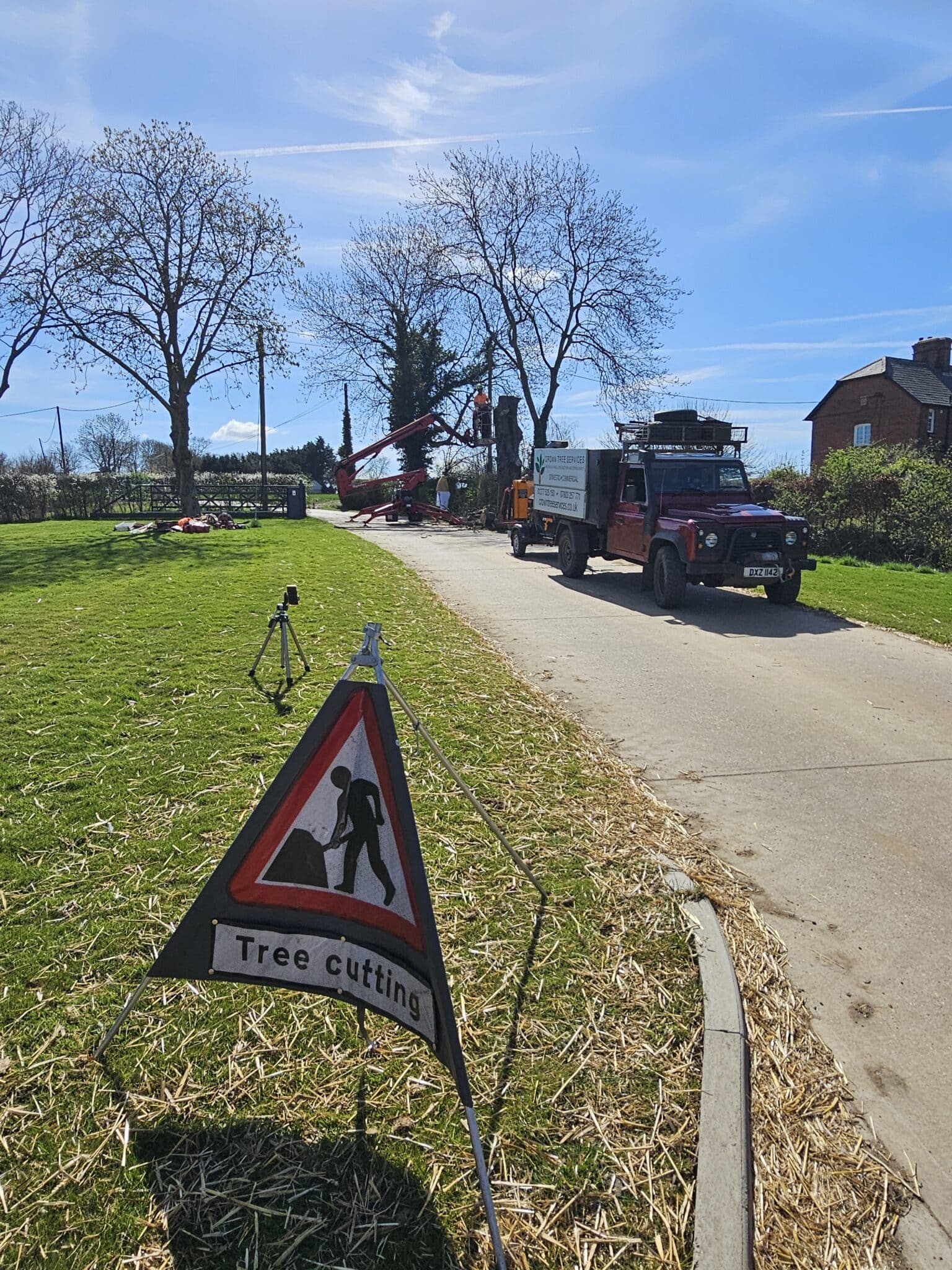
A triangular "Tree cutting" warning sign is placed on a grassy verge beside a rural road, where vehicles and tree cutting equipment are visible. Workers are present under tall trees with some branches already removed.
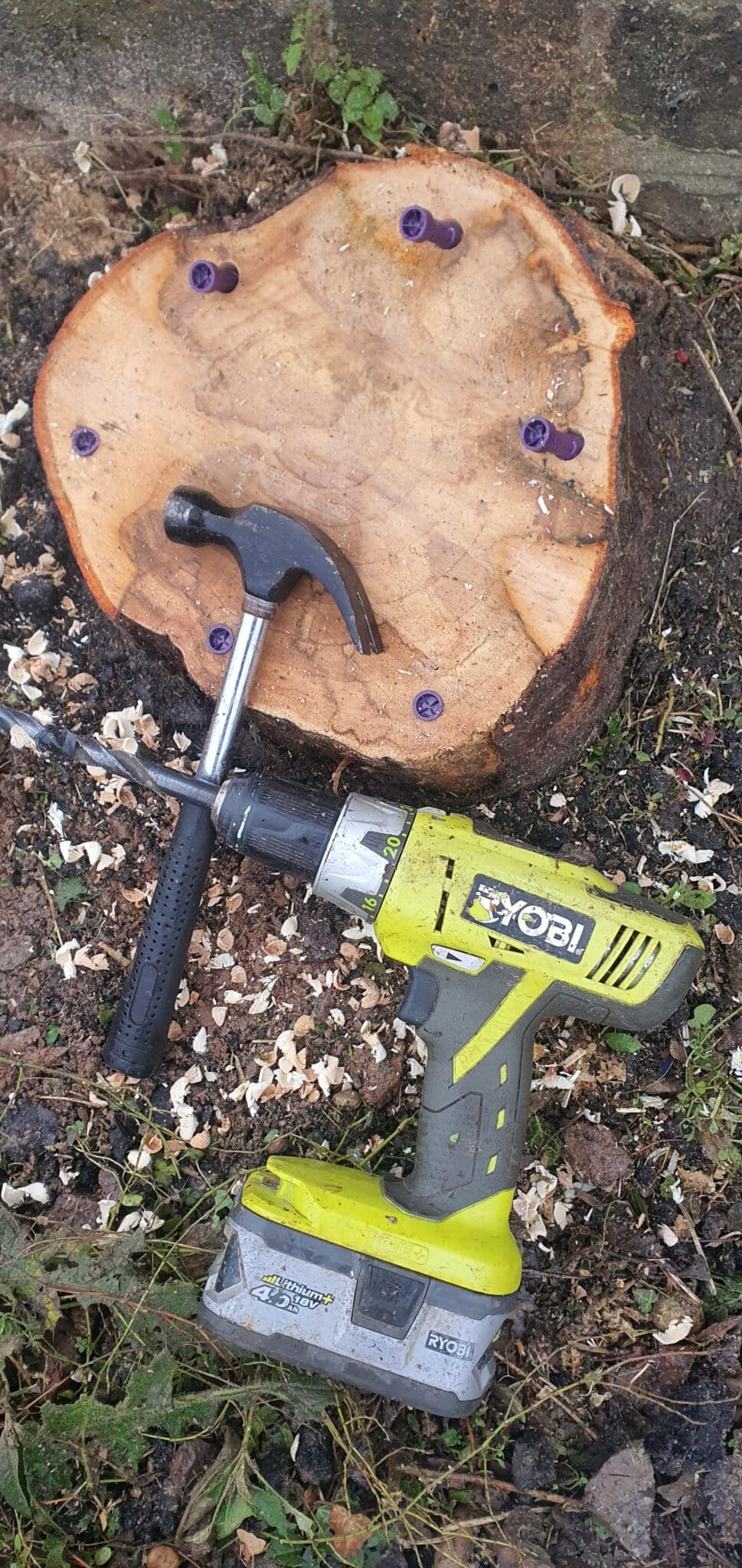
A hammer and a green Ryobi cordless drill rest on a tree stump with purple screws partially embedded around its edge. Wood shavings and grass are visible on the ground.

S

  • Section Felled/Sectional Dismantling: When a tree is taken down section by section rather than all at once.
  • Selective Pruning: Choosing specific branches for pruning to improve shape and safety.
  • Selective Reduction: Reducing certain parts of the crown without changing its entire shape.
  • Shrub Pruning: Cutting back shrubs with shrub trimming to keep them healthy, neat, and tidy. Find out more about shrub pruning.
  • Shrub Removal: Removing shrubs completely while preventing re-growth.
  • Soil Compaction: Occurs when soil gets squashed too much, making it more difficult for roots to gain access to water and oxygen.
  • Structural Pruning: Shaping trees when they’re young to support growth.
  • Stump Grinding: Grinding a tree stump down, below ground level, to prevent re-growth.
  • Tree Stump Removal: Removing the whole tree stump and its roots from the ground. Take a look at our tree stump removal service.
  • Subsidence: Ground movement caused by tree root growth. Can damage buildings and surroundings if not managed.
  • Surveys (General): Any type of tree inspection, assessment, or report.

T

  • Taper: The natural narrowing of a tree trunk as it rises upwards.
  • Target Pruning: Pruning in targeted areas to help a tree heal.
  • Thinning: Removing a few branches to make the tree’s crown less dense.
  • Topping: Completely cutting off the top of a tree (not recommended).
  • Transplant Shock: When a tree struggles to maintain its health after being moved or relocated.
  • Tree Constraints Plan: A plan used during construction to show where building work can happen to prevent tree harm.
  • Tree Line: The edge of an area where trees are capable of growth.
  • Tree Preservation Order (TPO): A type of legal protective order that stops certain trees from being cut or damaged without prior council permission.
  • Tree Protection Plan (TPP): A plan for keeping trees safe during construction projects.
  • Tree Reduction: Making a tree smaller in height or width. See how our team manages tree reductions.
  • Tree Risk Assessment (TRA): Conducting checks that assess a tree for any potential safety risks.
  • Tree Survey: A detailed report on a tree’s type, size, condition, and eligibility for tree work.
  • Tree Surgery: The physical side of tree care — pruning, removing, repairing, etc.
  • Trunk: The main stem that holds up a tree’s branches.
A worker operates a red cherry picker to trim branches from a tall tree along a rural road, with a red brick house and clear blue sky in the background.
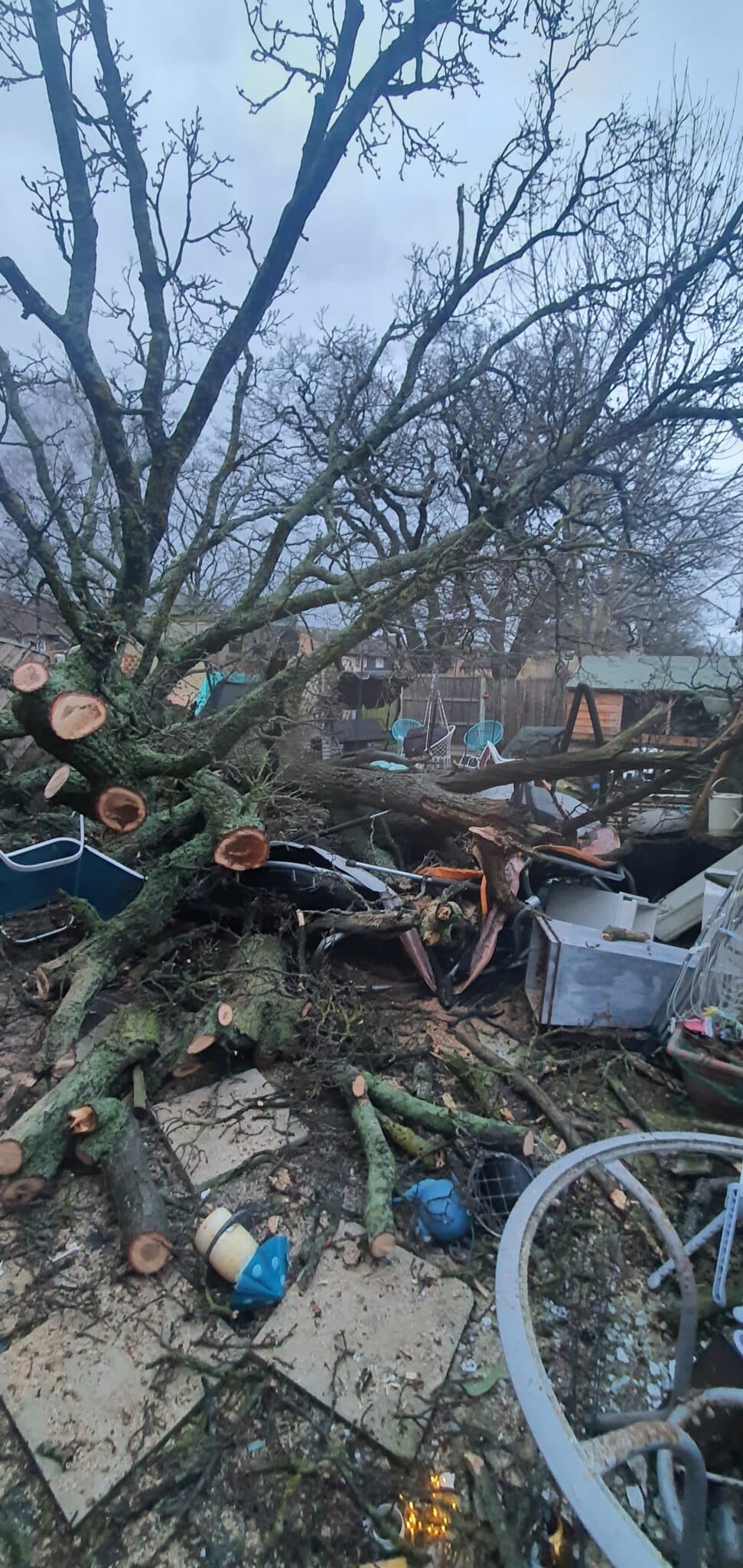
A large tree has fallen, crushing playground equipment and debris in a garden. Broken branches, toys, and scattered items are visible among the wreckage beneath the tree on a cloudy day.

U

  • Uprooting: When a tree is pulled out of the ground, either intentionally or unintentionally by severe weather, for example.

V

  • Veteran Tree: An old tree with significant wildlife or historical value.
A large leafless tree stands on a grassy patch at the corner of a residential street with brick houses and cloudy skies in the background. A person walks on the left pavement.
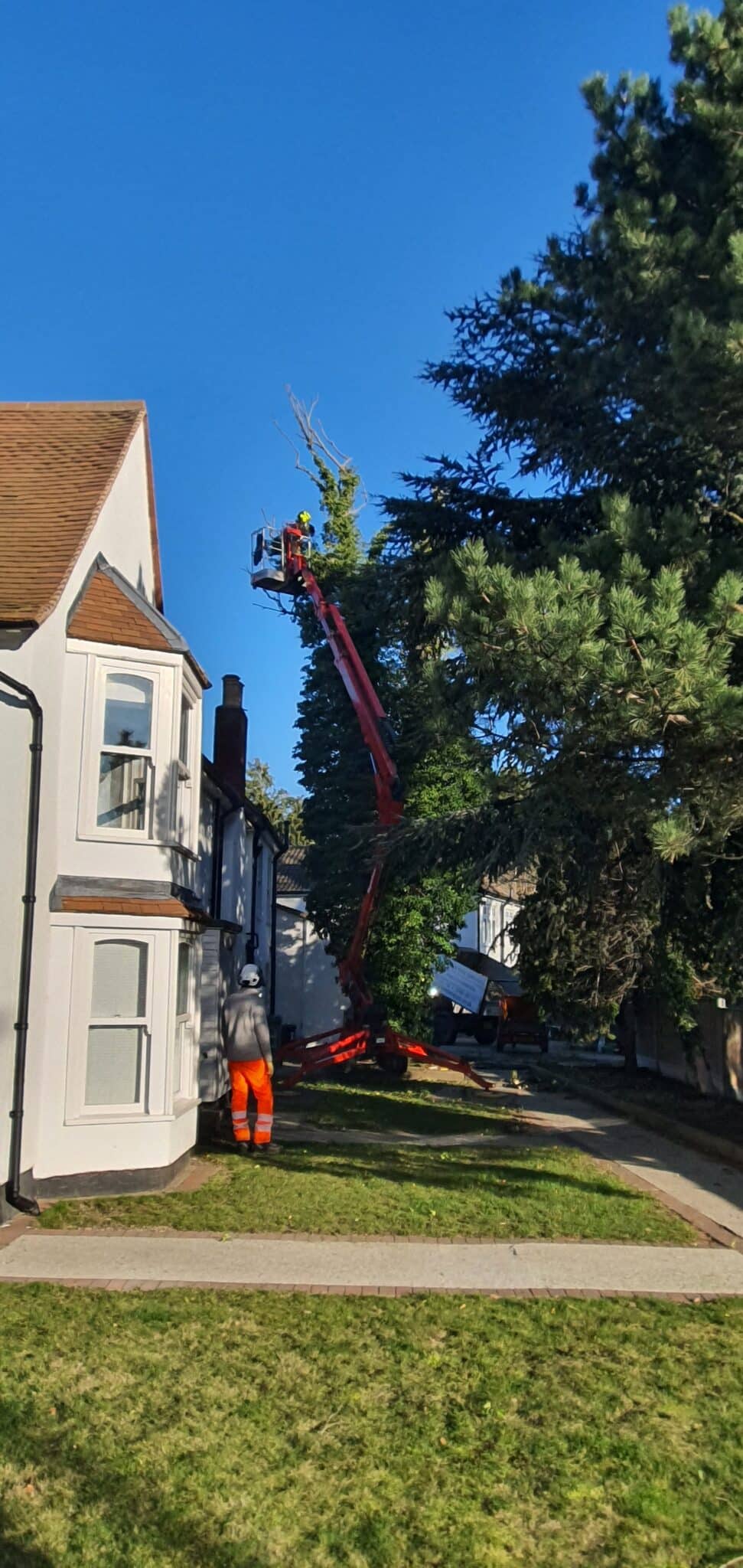
A worker in orange gear operates a red cherry picker, trimming tall trees next to a white house under a clear blue sky. The cherry picker is extended high above the ground.

W

  • Wilting: When leaves droop and become limp, most often due to a lack of water.
  • Windthrow: When strong winds blow over a tree.
  • Wood Decay: When fungi present on a tree start to break down its wood.
  • Woodland Management: The act of managing woodland with a woodland management plan to keep it healthy and thriving.

Y

  • Yellowing: When leaves start to turn yellow due to disease, or a lack of nutrients or water.
A tree surgeon in safety gear cuts branches high up in a damaged tree, whilst another person stands below near a wooden building, surrounded by greenery and fallen branches.
A green circular logo with abstract lines forming the shape of a letter "Q" and a small leaf. Below the logo, black text reads "QTRA REGISTERED USER.
TrustMark logo with a geometric green and dark blue hexagonal icon on the left and the words "TRUSTMARK Government Endorsed Quality" in blue text on the right.
Logo featuring the word "smas" in dark green lowercase letters with a large grey asterisk above the "s" and "WORKSAFE" in orange uppercase letters below, next to an orange tick in a circle.
A green rectangular sign with "CQMS" in large white letters; the "Q" is yellow with a crown inside. Below, "Safety Scheme" is written in yellow. The sign has a white border.
Logo featuring the text “smas worksafe consultant as recognised by SSIP Safety Schemes in Procurement” with a blue and white colour scheme. SSIP has a blue ribbon under the letter 'I.
White word "VALID" inside a white circle, set against a dark green square background.

Get in touch with our friendly team

If you need planting planning advice, habitat creation support, or any other type of tree care in Essex, we’re just an enquiry away!

Call 01277 525150, email info@crowntreeservices.co.uk, or fill in our online contact form for more help from our tree surgeons in Essex.

Crown services cut a large fir tree down in our garden as it was very overgrown. The service was seamless from start to finish, with the start of the estimate down to the clearance of the debris. The lads worked hard and were very polite and respectful. Very clean and tidy service and completed the job in time estimated. Would thoroughly recommended this service to others.

Sheila W

Steve and his team are highly recommended for a friendly, fast, efficient and tidy service. Had a 100ft overgrown garden totally cleared and now maintained to a high standard for my elderly bed-bound mum, who feels confident to leave her treasured garden in their hands. I also have had my garden cleared of bushes and trees and redesigned exactly to the way I wanted so that I can manage it on my own. Nothing is a problem for these guys, highly recommended. You get what you pay for!

Belinda L

Used several times for tree services. All carried out very professionally and for a fair price.

Amanda W

Great friendly service. Arrived on time and left my garden clean and tidy. Thank you.

Laura B

The service from Crown Trees was excellent, from the first appointment through to the work being completed the team were thoroughly professional and the quality of their work was 1st class – will definitely be using them again.

Ian Moore, Your Content Goes Here

Very friendly excellent standard of work. Highly recommended,will use again when trees need more work.
Very reasonable rates.

Colin B

Reliable, trustworthy and hard working. Would use in any future works.

Robert A

Been using Crown for years! Very reliable, good advice but more importantly a legitimate professional company. Totally recommended.

Warren T

“Very pleased. Crown reduction on our eucalyptus went very well. Guys were polite and helpful. We had plenty of time to talk about what we wanted so we love the result. They arrived on time, worked efficiently and left everything all tidy, no fuss, no mess. We highly recommend them!”

Catherine McCormick, Essex

Excellent service. Just nice people who are very good at their job. Removed a tree which was pretty big without a fuss. Tidied up afterwards no problem. No hesitation in recommending this firm. Well done.

Will G, Your Content Goes Here

I have been using Steve and his team for a number of years now and have always been truly satisfied with the standard of work they produce, whether it be from a simple trimming of conifers or large scale removal of established trees, their service is fantastic. Steve’s knowledge and experience is extremely broad and the advice he has given myself has always been of great benefit. His entire team are always polite, courteous and prompt. I would not hesitate to recommend them.

Toby C
Great job as always. Used Crown Tree for many years for various jobs. Just completed another great job on the pruning of our oak tree. Did the council application for us as it has a TPO, very professional and no mess left behind. Perfect.
Guy C, Your Content Goes Here

Very reasonable price. Very polite cleaned up afterwards and finished on time. Would highly recommend.

Daniel S

Had Crown Tree Services carry out some work which Im more than happy with. They were very professional, tidy, good workers and would happily use them again. Highly recommended.

Chris C

Used Crown Tree Services to pollard the London Plane tree in our front garden. Crown Tree Services arrived on time and did an excellent job with the pollarding and thoroughly cleaning up before leaving. Very pleased with their work and will definitely use them next time we need any tree services.

Simon P, Your Content Goes Here

We’ve used Steve and his team at Crown Tree Services for many years both for gardening and tree work. They are always reliable, punctual and friendly and with the tree work they did for us were very knowledgeable about the laws around trees, and also what exactly needed to be done to best serve our garden at the right time of year. I would highly recommend them!

Debbie C

“They have done a fabulous job and I am so very pleased with their work. They are a very knowledgeable, hard working team, who cleared up after themselves. I throughly recommend this firm.”

Brenda, Location

Had this company in for a tree removal. Great service and left the garden really clean. Well recommended.

Steve O
Competitive quote, work was done quickly, and efficiently workmen were very knowledgeable and respectful would definitely use again
Jackie Butler, Your Content Goes Here

We used Crown Tree Services to remove a tree from our back garden. The team arrived on time, were polite, very efficient, removed all debris and completed the job within the estimated time and quote. Would highly recommend Steve and team, and would use again!

Gerry M