Emergency Call Out – Call Us On 07803 257771

Logo for Crown Tree Services featuring a green tree icon on the left and the text "CROWN TREE SERVICES Arboricultural, Contractors & Consultants" in green on the right.
Pollarding2026-06-25T22:18:34+01:00

Expert Tree Pollarding Services in Essex

Pollarding

Crown Tree Services provides expert tree pollarding across Essex, carried out by qualified, fully insured tree surgeons. From ash trees in domestic gardens to common lime trees lining residential streets, we pollard with care and precision – maintaining size, shape, and structural integrity without overstressing your trees.
What does tree pollarding involve?

Pollarding is a pruning technique that controls a tree’s size and shape while promoting healthy growth. The method involves cutting the upper branches to a specific point known as ‘the pollarding head’, while leaving the trunk untouched. You’ll be able to spot a freshly pollarded tree by its characteristic knuckles at the end of the branches.

Pollarding has been around for thousands of years. Initially, it contributed towards producing timber and sheltering livestock. However, during the 18th and 19th centuries, it became useful for creating uniform trees in urban areas and reducing the risk of fallen branches. The reason the UK has so many ancient and veteran trees is because of them being managed as pollards in the past, when we used to use the timber as different products.

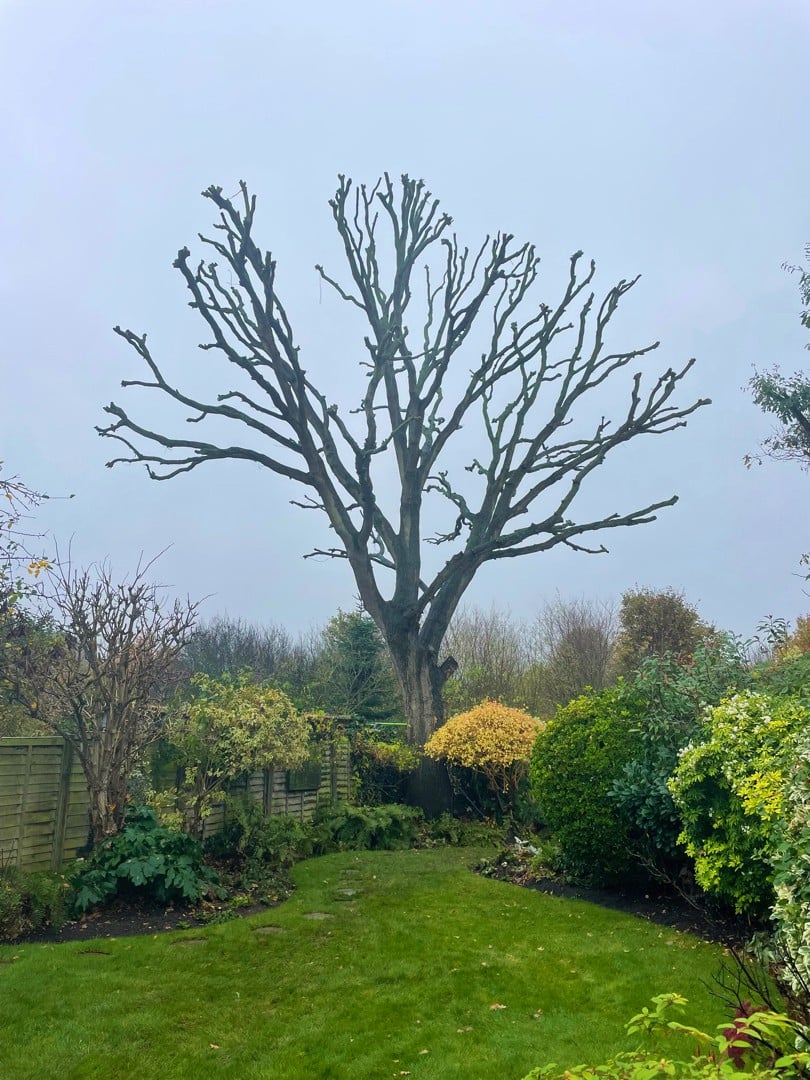
A large, leafless tree with many thick branches stands at the end of a green, well-kept garden bordered by shrubs and bushes under a cloudy, grey sky.
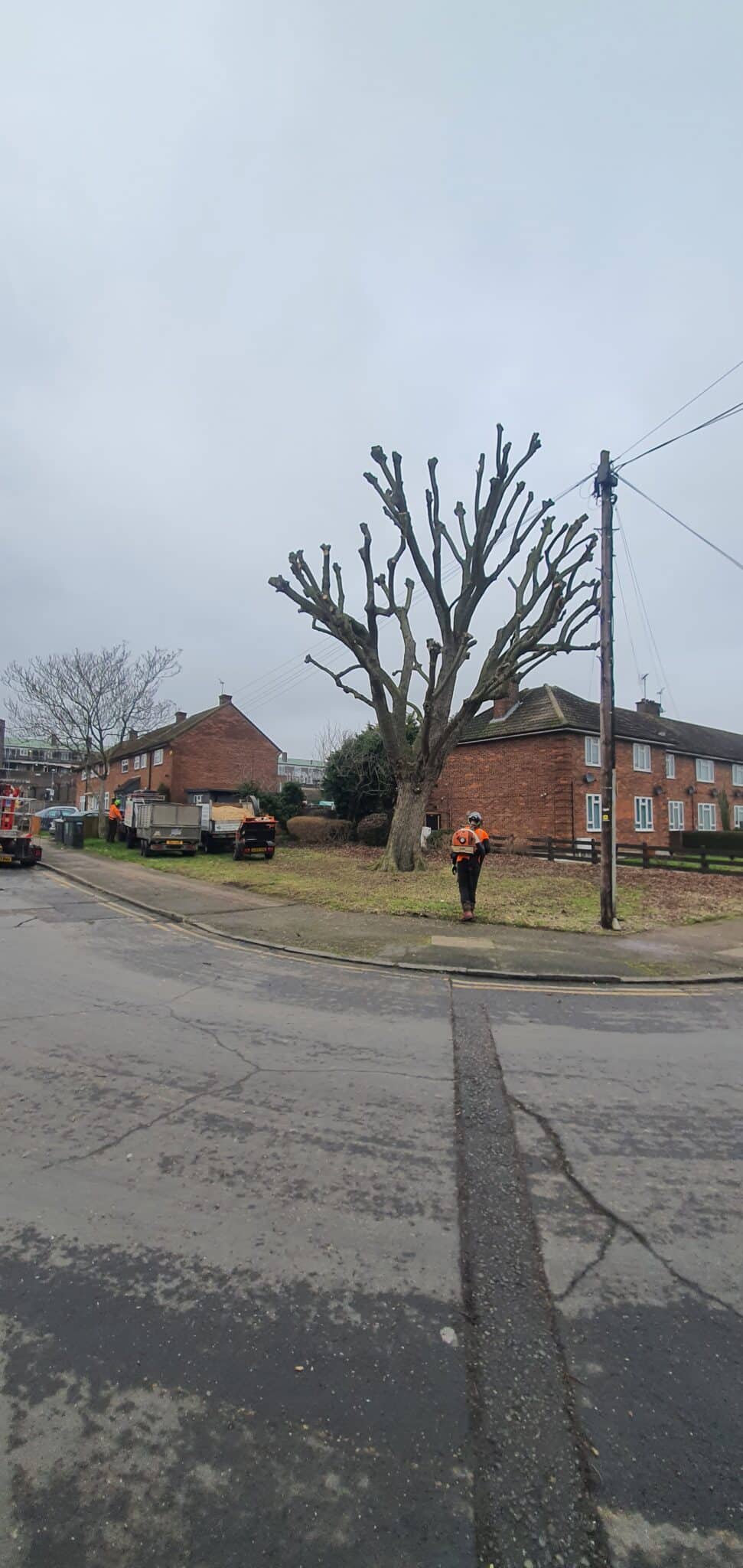
A large tree with all its branches heavily pruned stands in front of brick houses on a cloudy day. A worker in an orange vest and helmet stands nearby, with vehicles and equipment visible on the grass.

Benefits of professional tree pollarding

Although it’s not as common as it once was, pollarding remains a valuable technique, especially within an urban environment. When carried out correctly, it helps to keep trees healthy while controlling their shape and size.

There are some key benefits to pollarding:

  • Tree health: Pollarding promotes new growth from the cut points to create a lush, dense canopy. By removing infected or infested branches, this technique can also stop the spread of tree diseases and pests.
  • Aesthetics: It can help you maintain a tree’s size so it doesn’t overgrow, keeping rows of trees neat, tidy, and uniform, particularly in formal gardens, public parks and domestic urban gardens.
  • Management: Depending on species, climate and location re-pollarding (removal of new growth) would be undertaken typically every 3-5 years. This is to help maintain the size of the tree and mitigate against the branch unions failing.

Can all trees be pollarded?

It’s important to note that pollarding isn’t suitable for all tree types — some species won’t be able to grow back properly. Some of the best tree candidates for pollarding include:

  • Willow
  • Oak
  • Hornbeam
  • Common Lime
  • Ash
  • Yew
  • Holly
  • Bay Laurel

If you have any trees that need pollarding or you’re unsure whether this method is suitable, please feel free to contact the Crown Tree Services team.

We have years of experience and are fully qualified to assess your trees and recommend the best course of action. We’ll always put the health of your trees first and encourage sustainable, long-lasting solutions.

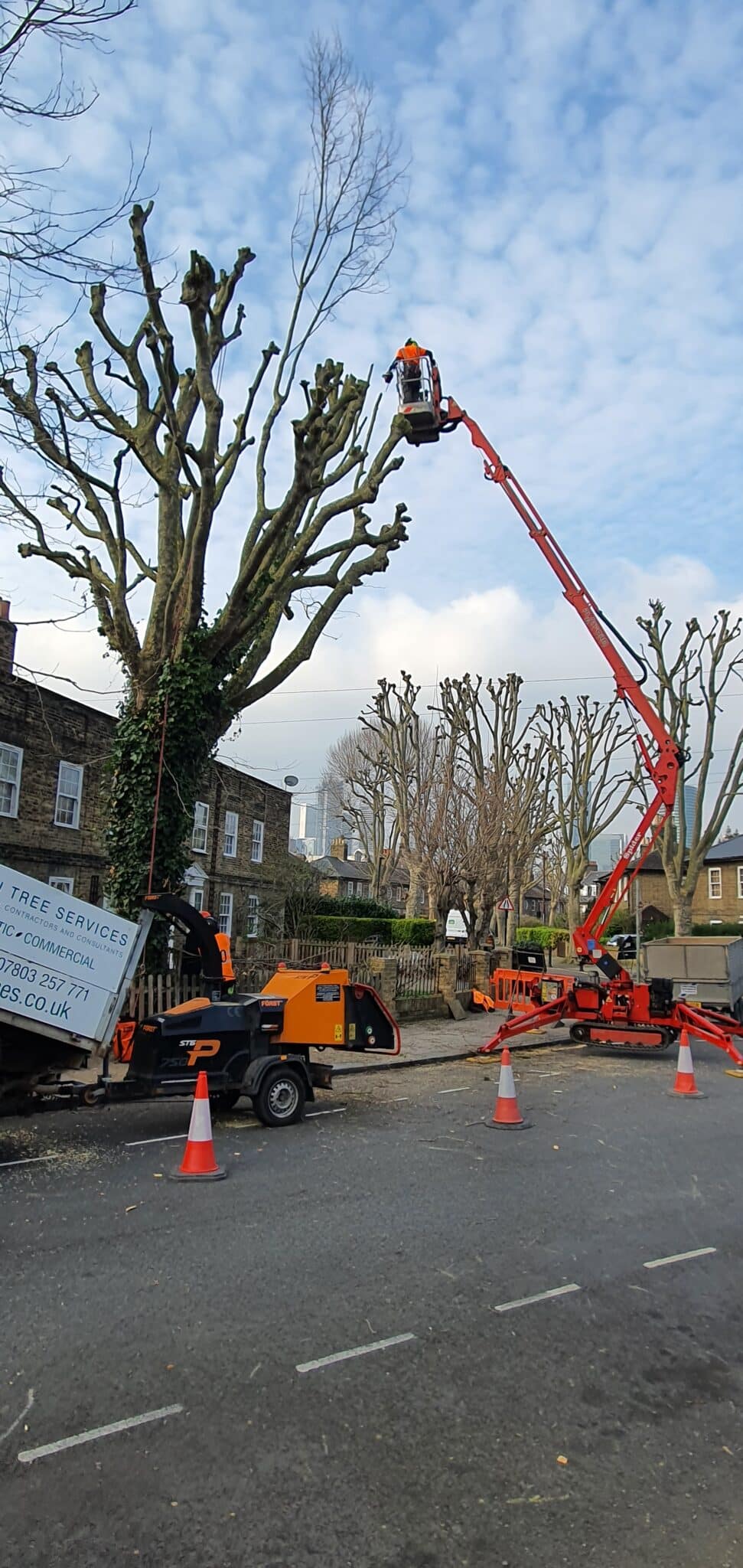
A tree surgeon stands on a raised cherry picker, trimming tall trees beside a residential street. Safety cones, a wood chipper, and a tree services van are visible near the kerb. The sky is partly cloudy.
A white utility lorry with an extended orange cherry picker lifts a worker to trim tall trees in a grassy garden, with a wooden fence, blue sky, and other equipment in the background.

Pollarding best practices

Pollarding a tree takes skill and precision. It’s possible to over-pollard a tree, leading to a weakened structure, uneven regrowth, and potential dieback. With this in mind, here are some best practices our team will always employ.

Pollarding can be carried out all year round, however some trees are seasonal when it comes to removing branches, so it’s always best to check with a professional like the team at Crown Tree Services.

It’s best to pollard a tree every 3-5 years to keep its size and shape under control without causing the tree undue stress.

Pollarding cuts need to be very precise, made just above the previous year’s incision to prevent decay and disease.

Once the tree has been pollarded, it will need monitoring to keep an eye out for signs of stress or disease. It may also require watering or fertilisation to ensure healthy growth.

Pollarding often involves working at heights, which must be done safely, using the right equipment, including rope access climbing equipment or a cherry picker (MEWP).

Domestic & commercial pollarding across Essex

Whether you need a hand with landscape maintenance for a park or garden support, we’re pleased to offer our services to both homeowners and businesses.

Domestic pollarding

Could pollarding be suitable for your trees at home? We can help keep your garden neat and ensure that any trees on your driveway or property boundaries are maintained at the right size.

Four people wearing safety gear and helmets stand outdoors in front of a large tree, smiling for the photo. Cut logs are stacked on the ground in front of them, and leafy branches are visible in the background.

Commercial pollarding

We’re also here to help businesses, local authorities, and other commercial entities make sure that any trees under your care are well-maintained.

We can arrange regular pollarding schedules so you have peace of mind knowing your trees will be kept to size, long-term. Our trained professionals are fully insured and ensure that any work undertaken meets the highest safety standards.

A red utility lorry with a "Down Tree Services" sign parked on grass under a leafy tree; tools and equipment are in the lorry bed, and a wooded area is visible in the background.
A small digger and an orange wood chipper are working on a grassy field, surrounded by piles of branches and leafless trees under a cloudy sky.
A red cherry picker crane extends high next to a house, lifting a worker in a safety cage to trim branches from a tall tree. The scene is set in a grassy garden on a clear, sunny day.
A tree surgeon in safety gear cuts branches high up in a damaged tree, whilst another person stands below near a wooden building, surrounded by greenery and fallen branches.

Tree pollarding services in Essex

The Crown Tree Services team is based in Ongar and can provide our expert tree pollarding service across Essex and nearby bordering towns. From Brentwood tree services, to Billericay and Romford, we’re here to help residents and businesses across the region — take a look at the areas we cover.

Can’t see your location, please don’t hesitate to get in touch to see what we can do.
Can’t see your location, please don’t hesitate to get in touch to see what we can do.

Call 07803 257771 or email for more information

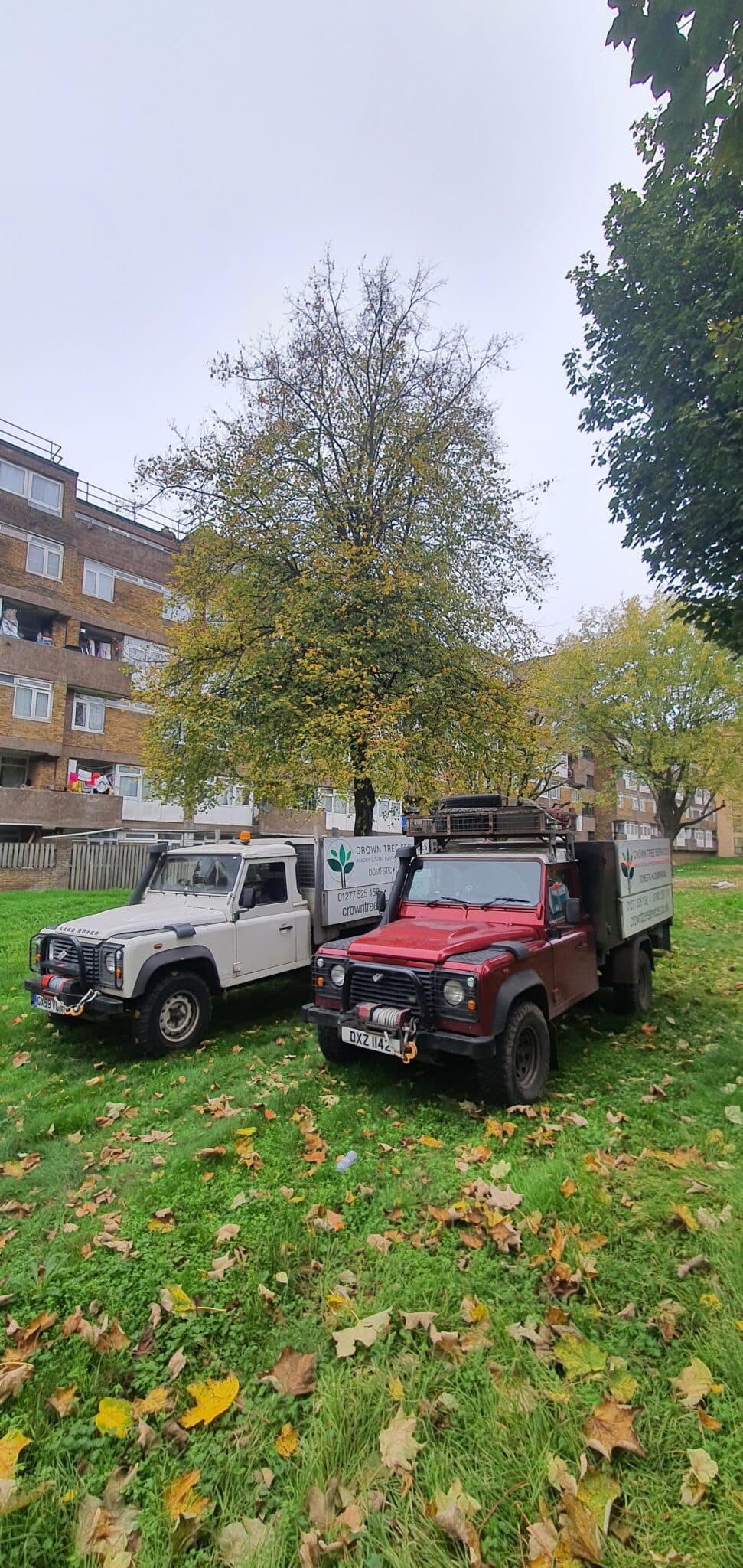
Two utility lorries, one white and one red, are parked on grass near a tree with autumn leaves. Block of flats are visible in the background under an overcast sky.

Book a free pollarding quote in Essex

Let our specialists provide the care and attention your space needs with our precise tree pollarding service. If you have any questions, please get in touch by calling 01277 525150 or emailing crowntreeservices1@gmail.com.

You can also fill out our request form to book a free, no-obligation site assessment.

FAQs

Can pollarding help in emergency tree situations?2026-02-10T14:40:08+00:00

Pollarding can be an effective solution when a tree has become unsafe due to storm damage, high winds or structural failure. As part of our emergency tree services across Essex, our experienced emergency tree surgeons assess whether pollarding is the safest and most appropriate option. For emergency tree services in Essex, please call 07803 257 771.

Is pollarding good for trees?2025-08-13T08:15:47+01:00

When the technique is carried out properly, pollarding can be beneficial for trees, helping them grow healthy canopies. However, if done at the wrong time or using a poor technique, it can potentially harm a tree.

What is the difference between pollarding and coppicing?2025-08-13T08:15:05+01:00

Both coppicing and pollarding are tree pruning techniques, but they differ quite a bit. Pollarding focuses on trimming upper branches to maintain a tree’s size, while coppicing is carried out at ground level to encourage new growth and a longer lifespan, traditionally for different wood products to pollarding.

Is pollarding only for trees?2025-08-13T08:14:31+01:00

Although pollarding is commonly applied to trees, it’s also possible to pollard shrubs. Learn more about shrub pruning and removal.

Crown Tree Services
Book your tree services with confidence

From Chelmsford to Romford and Chigwell to Basildon, our tree surgeons are only a call away. We strive to deliver only the best tree health, care, and maintenance services in the industry.

Contact our team today by calling 01277 525 150 or by completing our service request form. We’ll be in touch as soon as possible to help you with all your tree service needs.

Get a Free quote

Whether you’re looking for a reliable tree surgeon in Chelmsford you can trust, a highly rated Brentwood tree service team, or Hornchurch tree services you can rely on, Crown Tree Services’ expert tree surgeons in Essex are here to help.

Prefer to Call or Email?

We also offer emergency tree surgery in Essex.
Call us on 07803 257771

This field is for validation purposes and should be left unchanged.

Get a Free quote

If you’re looking for a reliable and highly rated Essex tree service team, Crown Tree Services is here to help. Get in touch today for a free, no-obligation quote – a fixed cost for the work you require with no estimates or hidden costs. Fill out our quick and easy online enquiry form or give us a call.

Prefer to Call or Email?

We also do emergency callouts.
Call us on 07803 257771

This field is for validation purposes and should be left unchanged.
Go to Top