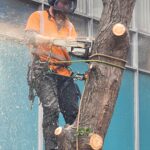
The main signs a tree is dying are dead or bare branches in the growing season, cracked or peeling bark, fungus on the trunk or roots, a sudden lean and leaves that turn early or never appear. Many struggling trees can still be saved if the problem is caught early. An arborist’s assessment tells you whether a tree needs care, careful pruning or, as a last resort, removal.
How can you tell if a tree is dying?
You can usually tell a tree is dying from a mix of signs in its crown, bark, trunk and roots. One symptom on its own is rarely conclusive, but several together, or a steady decline over two or three seasons, point to a tree in real trouble.
The most reliable time to check is late spring and summer, when a healthy tree should be in full leaf. Walk around the tree, look up into the crown and compare it with similar trees nearby. A tree that looks noticeably thinner, paler or patchier than its neighbours deserves a closer look. Not sure what to look for and need an expert opinion? If you are based in Essex and need a tree condition and health survey undertaken to assess the health of your tree, get in touch with the Crown Tree Services team.
What are the warning signs of a dying tree?
The clearest warning signs of a dying tree are sparse or missing leaves, dead branches, damaged bark, fungal growth and changes to the trunk or roots. Here is what to look for.
- Bare or brittle branches. Branches that stay leafless in summer, or snap easily with no green under the bark, are dead. Dieback that starts at the tips and creeps inwards is a common sign of decline.
- Thinning crown or early leaf drop. Small, pale or yellowing leaves, or leaves that brown and fall in midsummer, suggest the tree is struggling to take up water and nutrients.
- Cracked, peeling or missing bark. Deep vertical cracks, cankers (sunken, dead patches) or large areas of bark falling away expose the tree to decay.
- Fungus on the trunk or roots. Mushrooms or bracket fungi at the base or on the trunk often mean decay inside the wood, sometimes well before anything else shows.
- Weeping or bleeding patches. Dark, sticky fluid running from the bark can be a sign of disease.
- A new or worsening lean. Trees that suddenly start to lean, or have soil lifting or cracking on one side, may have root problems.
- Hollow or soft wood. Cavities, crumbling wood or a hollow sound when the trunk is tapped can signal internal rot.
What causes a tree to die?
Trees in Essex most often decline because of root damage, drought stress, disease or old age. Essex is one of the driest counties in England, and its heavy clay soils shrink and crack in long, dry summers, which puts real strain on tree roots.
Other common causes include:
- building work, new paths or driveways that compact or cut through roots
- soil being raised or lowered around the base of the trunk
- waterlogging on poorly drained clay over winter
- diseases such as ash dieback, honey fungus and acute oak decline
- old pruning wounds or storm damage that let decay in
Knowing the cause matters, because it decides whether the tree can recover. The Crown Tree Services team can undertake a tree survey and put together a tree management plan to help support your trees recovery and health long term.
Can a dying tree be saved?
Yes, many dying trees can be saved if the cause is found and dealt with early. A tree that has lost some branches or had a few poor seasons often recovers well with the right care. A tree with advanced decay in the trunk or roots, or a fatal disease, on some occasions cannot.
Depending on what we find, steps that can help a struggling tree recover include:
- removing dead, diseased and dangerous wood to stop decay spreading
- a tree crown reduction or crown thinning to cut the load on a weakened tree
- relieving soil compaction and mulching around the root zone
- watering through dry spells, especially for younger trees
- regular checks to see how the tree responds
At Crown Tree Services, we always look at whether a tree can be kept before we talk about felling. A healthy, established tree is valuable for wildlife, shade, privacy and the character of your street, and it cannot be replaced overnight.
What should you do if you think your tree is dying?
If you think your tree is dying, get it looked at by a qualified arborist like the Crown Tree Services team before deciding anything. Do not prune it heavily yourself, as large cuts on a stressed tree can make things worse.
- Note what you have seen. Photos of the crown, bark and any fungus, and when you first noticed them, are a real help.
- Keep people clear. If dead branches overhang a path, drive, play area or road, keep the area clear until the tree has been checked.
- Book a professional assessment. A tree survey in Essex tells you the tree’s condition and the best way forward. Where a tree is near a home, road or public space, a tree risk survey gives a clear record of the risk and what to do about it.
- Check whether the tree is protected. Many trees in Essex have Tree Preservation Orders or sit in conservation areas. Even dead trees under a TPO usually need five working days’ written notice to the council before removal, unless they pose an immediate danger. We check this for you as standard.
- Act on the advice. If the tree can be saved, we will set out the care it needs. If it is beyond recovery and unsafe, we can manage safe tree removal and stump grinding to clear the way for a replacement.
If a dying tree has started dropping large branches or looks ready to fall, call our emergency tree surgeons in Essex on 07803 257771.
Get your tree checked by local Essex arborists
Crown Tree Services is a qualified, fully insured team of arborists based in Ongar, working to British Standard BS3998:2010 across Essex. We regularly inspect struggling trees as tree surgeons in Brentwood, tree surgeons in Chelmsford and providers of tree services in Billericay, along with the rest of the areas we cover in Essex.
You will get honest advice, not a sales pitch. If your tree can be saved, we will tell you how.
Call us on 01277 525150 or get in touch by filling out our quick and easy online enquiry form for a free quote.
About the Author: Stephen O'Reilly